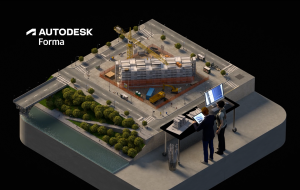
The AEC industry is being asked to deliver more today than ever before. Our communities need more housing, resilient infrastructure, and a more sustainable built environment. Projects are getting increasingly complex, and experienced teams are already stretched. That makes capacity one of the industry’s defining challenges.
AI can help create that capacity, but the built world sets a high bar. A bar that commodity AI, trained on the open internet, can’t clear. AI for the built environment needs the right data, project context, and industry expertise to understand the site, design intent, schedule, requirements, and decisions that shape a project, because those decisions eventually become the roads, schools, hospitals, and workplaces people depend on every day. In the Design and Make industries, oftentimes, “probably right” is still wrong. BIM transformed AEC by giving teams a digital representation of the built environment. As the industry evolves, we have the opportunity to extend the value of that model and its data by connecting the information, decisions, and context around it, so AI can better understand the project and help teams work across planning, design, construction, and operations. When that context carries forward, teams have more time to focus on the decisions ahead, and AI has a more trusted foundation to support their work. That continuity is what makes project intelligence possible, giving teams and AI a clearer understanding of the information and decisions shaping a project. That’s why we are building Autodesk Forma as the end-to-end industry cloud for AEC, bringing connected data, deeper collaboration, and more outcome-focused ways of working across the lifecycle. At AU26, we’re introducing new capabilities that help customers spend less time rebuilding context and more time moving projects forward.
Bringing real-world context into planning and design
One message I hear consistently from customers is that every building project is also a civil project. Roads, utilities, terrain, and subsurface conditions shape what can be designed and built, so bringing that context into the project earlier gives architects and engineers more room to evaluate options before changes become expensive. Autodesk is making a significant investment in infrastructure by connecting civil engineering more directly to Forma. Civil 3D will become our newest Forma Connected Client, enabling referenced-based interoperability with Forma and Revit so planners, architects, and civil engineers can work from shared project context. Designers can bring Civil 3D data into Forma as a starting point for planning and building design, while civil engineers can continue using the detailed workflows they rely on, helping teams maintain project context more consistently and reducing the need to rebuild information as projects advance. We’re also excited to announce Forma Street Design, a new solution that civil engineers and transportation planners can use to shape urban streets during early-stage design. Explore lane configurations and intersections within real-world context, design in 2D plan and section in sync, and test turning movements with vehicle tracking. Teams can explore changes live with stakeholders, and then carry the design, without rework, directly into Civil 3D for detailed engineering. We are planning a beta and invite customers to join the waitlist here.
Autodesk customer Kimley-Horn, a consulting firm that specializes in engineering, planning, and design, shares its experience using an early version of Forma Street Design.
Here are a few more ways we are extending connected infrastructure workflows:
- A unified geolocation engine and workflows across Forma, Revit, and Civil 3D will make it easier to keep location information consistent as teams move between solutions, reducing manual transforms and model misalignment.
- Deeper integrations with Fugro GeoDin® and GroundIQ®, and Esri ArcGIS, will bring richer subsurface and geospatial context into infrastructure workflows, directly within the tools teams use to collaborate, helping teams understand the environment around a project earlier and share that context more broadly.
The same need for context carries into building design. In Forma Site Design, Autodesk Assistant will be able to answer natural-language questions about a project site, while Building Layout Explorer can generate and compare multifamily layouts against a client’s unit mix. From there, teams can continue into Forma Building Design and Revit, carrying more of the project context into detailed design. That is part of the move toward outcome-based design, where teams can start with project goals and requirements and use automation to explore options earlier.
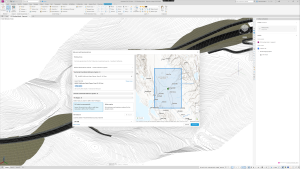
New shared geolocation engine in Civil 3D will make it easier to keep location information across applications.
Autodesk’s 2027 State of Design & Make Report finds that 57% of Pacesetters – the organizations leading in digital transformation, AI, and sustainability – integrate AI into design workflows. As AI becomes part of everyday design work, we are focused on practical ways it can give architects more time for design. In Revit, new AI-powered workflows can autocomplete room elements, optimize annotations, and automate documentation across multiple views, with architects reviewing and accepting the results. These new capabilities show where we are headed with Forma. Over time, more of the design, analysis, coordination, and documentation work architects do in Revit today will happen directly in Forma. We will continue to advance Revit and connect it more closely to Forma to give our customers a practical path towards that future.
Strengthening the connected foundation for collaboration
As projects progress, models and drawings multiply, and teams spend too much time figuring out what is current, approved, or changed. Forma Data Management provides the connected data foundation for Forma, helping project data move with the right structure and controls while preserving context across handoffs. This is the shift from files to connected, granular data in practice, where information is useful beyond the file or phase where it was created. We’re expanding how that foundation supports the day-to-day work of a project:
- Smart Controls use metadata, such as approval status, to manage access automatically as information moves through a workflow, helping approved information reach the right people while work in progress stays protected.
- Autodesk Assistant can search inside drawings and take users directly to relevant sheets, while Drawing Change Analysis helps teams identify meaningful differences between revisions faster.
- Drawing Compliance Review, planned for early next year, will help evaluate drawing packages against building codes, design standards, and owner requirements you bring to the project, surfacing potential issues earlier while professional review remains part of the process.
- And a deeper connection between Forma Data Management and Forma Board brings current project information and issues management into the same review space, giving teams continuity from review through resolution with a clear record of what changed, why it changed, and what needs to happen next.
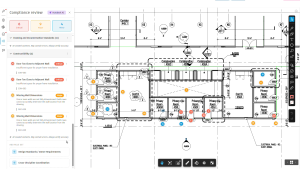
Drawing Compliance Review surfaces potential issues so teams can resolve critical, major and minor project issues earlier.
The value of keeping project information connected becomes tangible at Gillette Stadium in Foxborough, New England, where the Kraft Group prepares the venue for a diverse schedule of year-round events, from professional soccer matches to major concerts, and hosting New England Patriots games. Using Forma Data Management and Forma construction solutions, the Kraft Group teams are empowered to work from current project information as they collaborate, coordinate detailed work, and move the venue from one event configuration to the next.
The Kraft Group uses Autodesk Forma to prepare Gillette Stadium for its diverse event schedule.
Connecting project information from preconstruction through jobsite execution
Construction teams make consequential decisions long before they break ground, and the volume of information only grows once work is underway. Forma is connecting more of the construction workflows in the shared project environment so teams can reach the information they need faster and keep it useful as work moves forward. We are expanding that connected experience across preconstruction, coordination, and field execution:
- Forma Bid brings BuildingConnected bidding workflows into Forma, where contractors can manage invitations, level bids, compare pricing with estimates, and identify potential scope gaps. It is available today in beta for customers with a Forma for Preconstruction or BuildingConnected Pro subscription.
- As teams coordinate the work, model-based workflow improvements bring models, sheets, point clouds, geospatial data, and project information into a more complete view for more stakeholders.
- Once work is underway, insights powered by Autodesk AI now surface in Project Home in Forma Build, providing a personalized view of the items that need attention and helping users quickly understand why they matter before taking action.
- For work that needs a defined process and human approval, Workflow Studio lets teams build and test workflows such as a quality-inspection review path, then move critical reviews through to the right stakeholders.
- In the field, the new Daily Log Agent, available on mobile, can turn a superintendent’s spoken update into a structured daily log while the details are still fresh, reducing end-of-day re-entry.
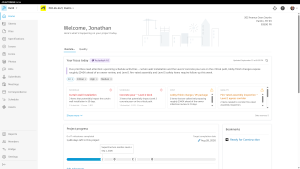
On Project Home in Forma Build, AI-powered insights surfaces items that need attention.
We are also expanding our set of specialized, AI-powered construction agents to support document search, submittal review, and bid proposal processing, to reduce manual reviews while keeping decisions with the people responsible for the work. Together, these capabilities help teams keep work moving by surfacing what needs attention, getting critical reviews to the right people, and capturing field progress as the work happens.
Building a more connected future for AEC with Forma
A more connected, intelligent future for AEC depends on project information and context staying useful as work moves forward, and on turning that continuity into more capacity for teams. Better continuity gives architects more time for design choices, engineers a clearer picture of real-world conditions, and construction teams an earlier view of issues that could affect delivery. Forma is where we are bringing that evolution together. Over time, more work will happen directly in Forma, with project information staying connected across the AEC lifecycle. That connected foundation is what makes project intelligence possible and enables new ways of working with AI. The next generation of Autodesk Assistant, which we are previewing at AU, brings project information, Autodesk tools and capabilities, and specialized agents together around the outcome a team is trying to achieve. The future is already taking shape. Connecting project information will give AEC teams more capacity to focus on the hard problems that only they can solve. What our customers create will become part of everyday life in communities around the world, often for generations. That’s what makes me hopeful about what comes next.
Frequently Asked Questions
What parts of the AEC lifecycle does Autodesk Forma support? Autodesk Forma is Autodesk’s end-to-end industry cloud for AEC, supporting workflows planning, design, construction, and operations. Forma Connected Clients extend that environment into the detailed desktop workflows customers rely on today, with Revit and Civil 3D connecting project data and context directly to Forma. Together, these cloud and desktop experiences help information move across disciplines and phases without teams having to recreate it at each handoff.
Will Autodesk Forma replace Revit? Over time, yes. More and more of the work that happens in Revit today will happen directly in Forma. That is intentional. Forma is the industry cloud for AEC, connecting project data, decisions and workflows across the lifecycle.
Today, teams can start projects in Forma Site Design or Forma Building Design and move into Revit for detailed design and documentation. Over time, more of those workflows, including design, analysis, coordination and documentation, will happen directly within Forma. Revit will continue to advance and become more deeply connected into Forma through shared data, cloud workflows and Forma Connected Client experiences.
We will not force a sudden transition, but the direction is clear: more AEC work will happen directly in Forma. We will continue investing in Revit to give customers a practical path toward that future.
How will Civil 3D work with Autodesk Forma? Civil 3D will become a Forma Connected Client, enabling reference-based interoperability with Forma and Revit. This will help teams maintain project context more consistently from early planning into detailed design, work across disciplines with less friction, and reduce the need to rebuild information as projects advance.
Civil 3D remains a critical tool for planning, designing, and delivering infrastructure projects, and we will continue to invest in it. Connecting it more closely with Forma will give customers a practical path to more connected, outcome-based workflows while using the detailed engineering capabilities they rely on today.
What AI capabilities did Autodesk announce for AEC at AU 2026? Highlights include Autodesk Assistant and Building Layout Explorer in Forma Site Design; AI-powered room and documentation workflows in Revit; drawing search, Drawing Change Analysis, and Drawing Compliance Review in Forma Data Management; specialized construction agents; Project Home Insights ; and a preview of the next generation of Autodesk Assistant for AEC.