AI is the next paradigm shift in design and manufacturing, and that shift is accelerating as manufacturers move beyond initial experimentation into adoption. Companies like O’Neal are already leveraging AI in Fusion to streamline their processes with tangible results. That is not surprising because the manufacturing sector has long embraced technology, seeking out the next competitive edge in productivity. Now, AI is the next phase of that evolution.
Why does AI for the physical world require a higher standard?
AI helps design and make industries turn more ideas into better products, faster. AI for the built world needs more than generic intelligence. “Close enough” isn’t good enough when you’re designing a vehicle, programming a CNC machine, or simulating how a product will perform. When AI is grounded in data, context and expertise, it can help people unlock capacity to design, build, and operate more effectively in the physical world. At AU 2026, we shared new AI advancements across PLM, Fusion, Inventor and Vault that will help bring the industry closer to that future.
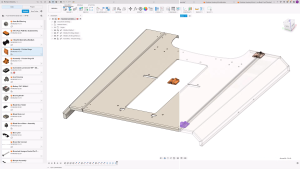
AutoAssemble in Fusion
What new AI capabilities are coming to PLM, Fusion, Inventor, and Vault?
One of the most immediate opportunities for AI is taking repetitive, time-consuming work off engineers’ plates. Autodesk aims to give people more time to solve harder problems and focus on work where their expertise matters most.
- Fusion: We are introducing new AI-powered capabilities in Fusion to automate more processes. Autodesk is building on existing AI features with strong adoption, like AutoConstrain, to create AutoTimeline, which converts imported geometry into editable parametric parts, and AutoAssemble, which intelligently brings those parts together into assemblies. System Modeler extends automation into manufacturing by helping teams automate machine setup, toolpath generation, and production preparation workflows. Rather than manually repeating the same processes for every job, teams can create reusable manufacturing automations that accelerate the path from design to production. And we are creating an agentic PLM experience that will easily connect product data and requirements, so teams can find then reuse existing work, coordinate work across teams, and keep product information current as projects evolve. Together, these capabilities create a digital thread that can give teams greater visibility and help reduce rework to accelerate design and manufacturing growth.
- Inventor and Vault: Autodesk Assistant now unlocks Inventor’s robust APIs and iLogic foundation to analyze models, modify parameters and components, create model states, and automate repetitive tasks. Vault uses Autodesk Assistant to search across existing data using natural language, to suggest the most relevant parts, and to help professionals choose the best option to build on what already exists, instead of reinventing every project. Inventor will also become the first Fusion Connected Client, making it easier for teams to connect desktop engineering workflows in Inventor with cloud-based data and processes in Fusion that support the broader product lifecycle.
Autodesk also continues to invest in an open and extensible platform, giving manufacturers more ways to build their own automations and connect Fusion to the systems and intelligence they already use. The promise of AI isn’t just about doing the same work faster. It helps people make better decisions. As AI becomes more deeply grounded in project intelligence, the industry will see new ways of designing and making the world. Manufacturers that adapt and embrace AI will be the ones who win in the long run. For more detailed information on product announcements made at Autodesk University 2026, please read the Fusion blog here.
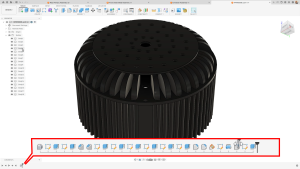
AutoTimeline In Fusion
FAQ
What AI capabilities did Autodesk announce for Fusion, Inventor, and Vault at Autodesk University 2026? At AU 2026, Autodesk announced new AI advancements across PLM, Fusion, Inventor and Vault, including capabilities designed to automate repetitive design tasks, improve part and assembly design workflows, connect product data, and help teams generate documentation and manage engineering information more efficiently. These specific capabilities include AutoTimeline, AutoAssemble, System Modeler, and an agentic PLM experience in Fusion.
Why does AI for design and manufacturing need engineering context? AI for the physical world demands a higher standard of accuracy and trust than general-purpose AI. Products are often complex assemblies that demand precision. In the physical world, AI must account for geometry, engineering intent, product data, manufacturing processes, the operating environment, and lifecycle requirements so it can support accurate decisions across design, production, and collaboration.
How is Autodesk using AI in design and manufacturing? to power task automation, workflow automation, and systems automation with a goal to unlock increased capacity for customers to create more. Specific areas include engineering documentation, product data, design reuse, and manufacturing with the goal of reducing repetitive work and helping teams make better decisions.