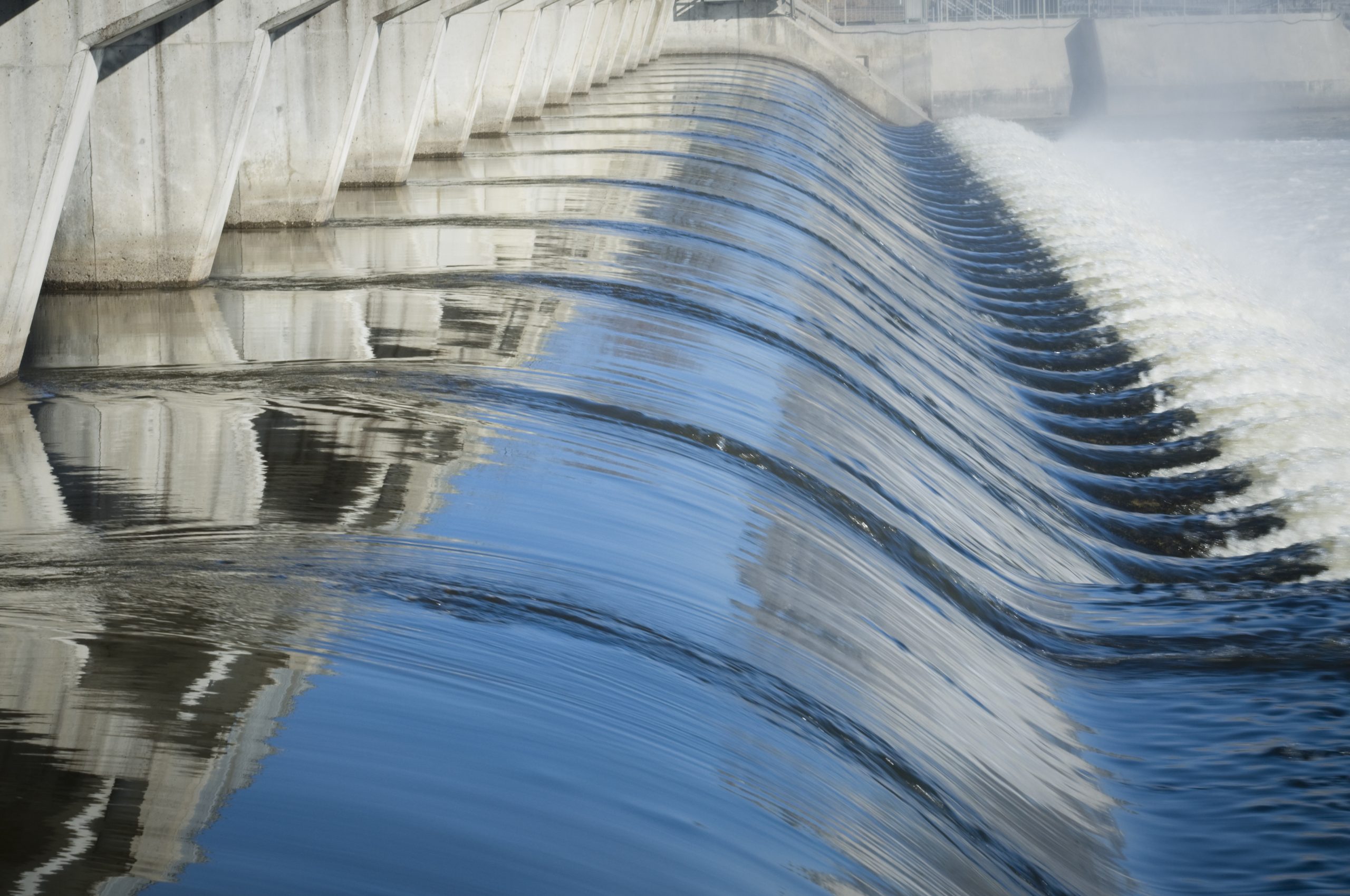
Connecting water data across the infrastructure lifecycle improves planning and long-term performance.
Water infrastructure is one of the most important systems most people never see. Buried beneath streets and behind treatment plant walls, it protects public health, supports economic activity, and underpins climate resilience in ways that are often invisible–until something fails. Yet despite its central role in the built environment, water is often managed through fragmented engineering workflows. Drainage analysis and hydraulic modeling are integral to land development and infrastructure planning. But the engineering processes associated with these analyses are often disjointed across planning, design, construction, and operations. Models are developed for specific project phases, data moves between tools, and the assumptions behind critical decisions are not always carried forward as projects evolve. Over time, these disconnects limit visibility, slow decision-making, and make resilience harder to achieve. As we recognize World Water Day, the opportunity is not simply to invest more in water infrastructure. It is to connect the data and decisions behind it across the infrastructure lifecycle. And that shift is already underway.
The real inflection point for water infrastructure
Water systems are facing rising complexity from climate volatility, aging assets, population growth, and expanding regulatory expectations. Without additional protection measures, annual flood damages for the world’s largest coastal cities could approach $1 trillion by 2050. Governments are responding with historic levels of funding. Yet funding alone will not determine whether these investments succeed. The policies and incentives that shape how infrastructure is planned, delivered, and managed will be just as important. Modern, resilient water infrastructure requires data continuity that extends from early design through decades of operation. Policy has an important role to play in making that possible, with regulatory frameworks and standards that incentivize project delivery approaches that enable that continuity. When planning models remain disconnected from operational data, or when construction insights fail to inform long-term asset management, utilities are left navigating risk with incomplete information. What the sector increasingly needs is shared intelligence that carries forward across the lifecycle.
Water as a connected system within the built environment
Water moves through every layer of the built environment. Development density affects drainage patterns. Road design influences runoff, while construction sequencing shapes long-term performance. Operational constraints should also inform design decisions long before ground is broken.Industry data reinforces how central water management has become to infrastructure design. According to Autodesk’s upcoming State of Design & Make report’s Spotlight on Transportation, 99% of transportation leaders say water management is important, and 69% report that water-related risks are becoming more prominent in design decisions. Transportation leaders are increasingly acting on this reality. For example, leaders at the Texas Department of Transportation have noted that roadway design decisions–from drainage systems to corridor planning–can significantly influence how communities manage stormwater and flooding risk. Treating transportation and water infrastructure as interconnected systems allows agencies to anticipate those impacts earlier and build corridors that perform more resiliently over time. This perspective is also shaping how major utilities approach infrastructure planning. In the United Kingdom, Severn Trent Water is using digital modeling and analytics to better understand how water networks interact with the surrounding built environment, from land use and drainage to long-term infrastructure performance. By treating water infrastructure as part of a broader ecosystem rather than a standalone network, the utility is improving how decisions are made across planning, design, and operations. Hydraulic modeling reflects this evolution. What was once primarily a validation step in design has evolved into a decision platform that helps engineers test extreme weather scenarios, growth projections, and asset failures before construction begins. When those models connect with GIS data, construction information, and live system inputs, they create a shared source of truth of how infrastructure actually performs, helping teams make smarter investment and planning decisions over the long term. Keith Muller, who leads product and engineering for Autodesk’s water solutions, describes the shift this way:“The utilities leading on resilience aren’t just investing in better models, they’re connecting design, asset intelligence, and operations into a shared decision environment. When that continuity holds across the full lifecycle, infrastructure stops reacting to climate uncertainty and starts adapting ahead of it.”
From concept to real-world impact
This shift toward lifecycle integration is already visible in how utilities and engineering firms are applying connected modeling and analytics today. For example, SA Water in Australia is advancing its digital maturity by embedding live network modeling into operational workflows, strengthening the link between simulation and real-world system behavior. By integrating model outputs with live system data, the utility is improving visibility into network performance and enabling more informed operational and capital decisions. In Spain, Aguas de Alicante is using a digital twin to enhance system visibility and guide investment decisions with greater precision, turning asset and performance data into actionable insights across planning and operations.Additionally, engineering firms such as Jacobs are applying integrated 1D and 2D hydraulic modeling to help cities like Toronto better manage stormwater risk. In Toronto’s Woodborough Park neighborhood, this approach reduced underground storage requirements by 35%, delivering an estimated CAD $2.5 million in savings while still meeting flood mitigation goals. Meanwhile, Orange County Sanitation District is prioritizing renewal strategies based on system behavior and consequence rather than age alone, using data-driven asset analysis to target investment where it has the greatest impact on reliability and long-term system performance.
These examples share a common thread: the tools required to model system behavior, analyze risk, and connect design intent with operational performance are already available. What differentiates leading organizations is how effectively they integrate the data across planning, design, construction, and long-term management. When modeling informs construction, when construction data feeds operations, and when operational insight shapes future design, resilience becomes cumulative rather than reactive.
A more connected path forward
The next era of water infrastructure will be defined by how well we connect the systems and decisions that shape it. When planning data, design models, construction coordination, and operational systems are connected in the cloud, information can move seamlessly across decades of asset life. AI will strengthen this continuity by surfacing patterns and identifying risk earlier, but its value ultimately depends on the quality and connectedness of the data behind it. The opportunity for the industry is to treat water not as a separate utility, but as a digitally integrated part of the broader infrastructure ecosystem. On World Water Day, we recognize the engineers, planners, and operators who keep these systems running under increasingly complex conditions. For infrastructure that is rarely seen, water plays a defining role in how communities grow and endure. Ensuring it continues to do so means strengthening the connections behind it—so the systems beneath our streets are as resilient and adaptive as the cities they support.