AI is expanding who can create what, making sophisticated content creation more accessible while underscoring the critical importance of human creativity, taste, and judgment in the creative process.
However, we are far from being able to create a movie from a single prompt, or even with a single model, making AI orchestration a key next challenge—helping creators connect multiple models, assets, decisions, and workflows, all while maintaining continuity, creative intent, and control.
AI can make iteration more valuable, helping artists explore ideas and make decisions earlier, before changes become costly, so they can spend more time shaping what audiences ultimately experience.
What becomes more valuable when more people can create?
Throughout history, technological innovation has expanded the possibilities of storytelling: what stories can be told, who can tell them and how. Technologies like the printing press, cameras, computers, and the internet significantly reshaped the production and circulation of narratives. Artificial intelligence is just the next technology in this evolution with its potential to let more people use video to create and share their stories. As technology lowers barriers to creative production, participation broadens, but competition for audience attention intensifies. Just as online publishing made it easier to share stories without guaranteeing readership, AI lowers the technical barrier to filmmaking but does not ensure that films stand out or guarantee audiences; that still depends on human creativity and creative judgment. “I believe creativity will actually become even more valuable than it is today. As more content gets created, what makes a story stand out will matter even more,” said Diana Colella, executive vice president of Architecture, Engineering, Construction, and Media & Entertainment at Autodesk.
What do professional creators need from AI next?
Today’s AI tools can produce compelling individual images, video clips, and other visual assets. Professional productions, however, require consistency across characters, environments, performances, and camera setups. As Colella explains, meeting that need means shifting the focus from individual outputs to coordinating AI across production. AI orchestration connects tools and workflows using shared production context. For Autodesk, this means evolving asset management into a form of production memory, a record of how assets were created, where they came from and how they relate to creative decisions. An AI control layer could connect that memory with the professional tools and production-management systems teams already use, helping them understand, reproduce and continue creative work. For example, a decision made early in production could remain linked to the assets and workflows it affects.
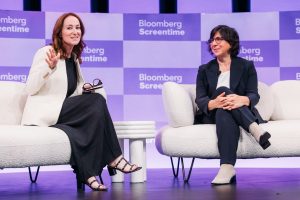
Hayley Romer (left) and Diana Colella (right) discussing the next era of AI-powered storytelling at Bloomberg Screentime.
How can AI make creative iteration easier?
Late-stage changes can be costly. Colella sees AI helping artists test ideas and make decisions earlier in production. For example, Autodesk Flow Studio can let filmmakers explore a different camera angle or environment while preserving a character’s performance, without rebuilding the shot from scratch. That gives filmmakers more time to shape what audiences ultimately experience.
Who makes the final creative decisions?
Like people in other industries, creators have questions about what AI means for their work. At Autodesk, our view is that technology should serve to expand artists’ creative possibilities while leaving them in control. “The artist will always continue to be the person who controls the outcome,” Colella said. The goal isn’t simply to create more content. It’s to help more people bring their ideas to life and give professionals room to explore and iterate while remaining in control of the result.