At the 79th Cannes Film Festival, AI dominated the conversation. During the festival, Autodesk’s Nikola Todorovic talked about why it’s okay to worry about AI, why sitting it out is the real risk, and why the people who make films should be the ones building the tools.
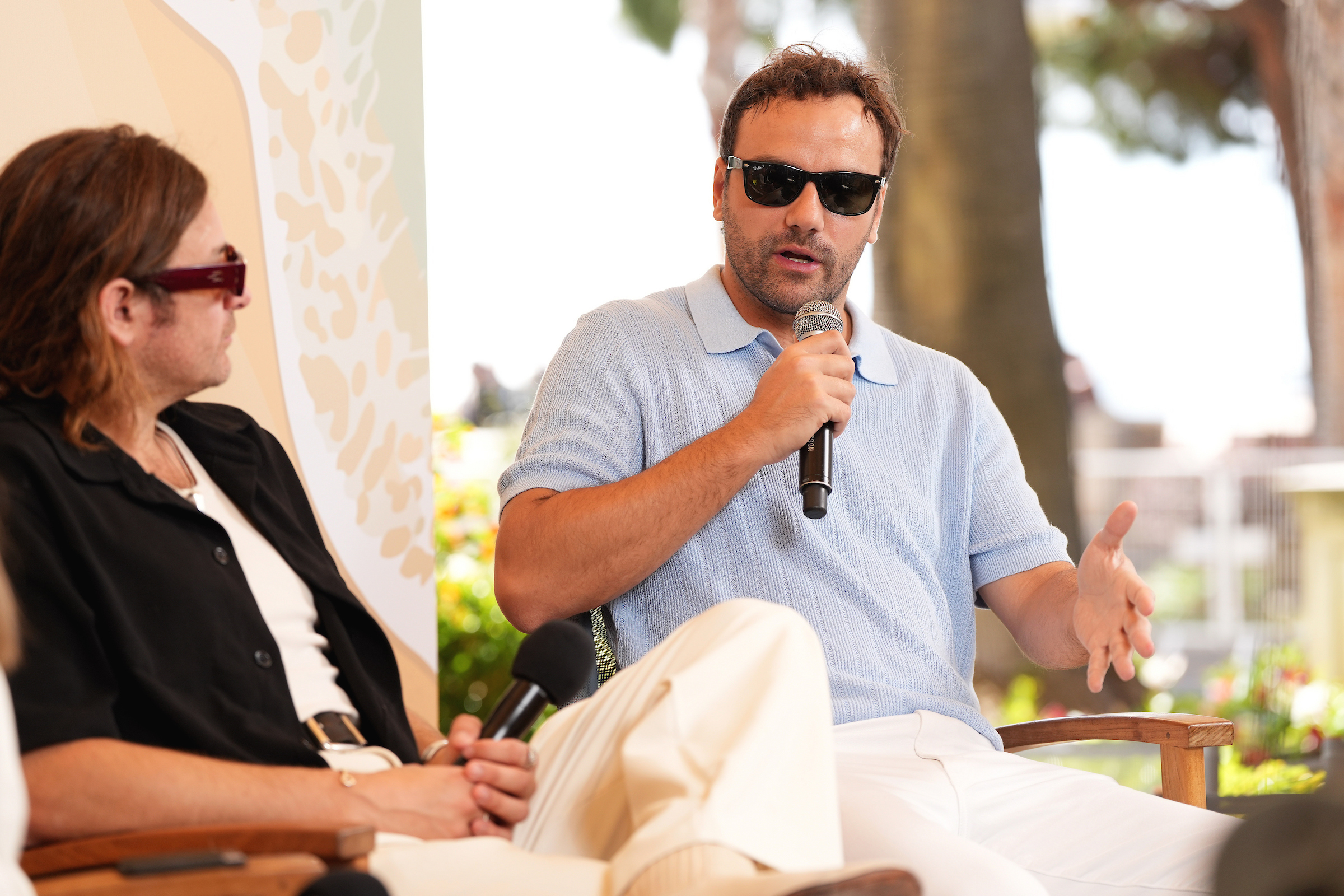
Nikola Todorovic attends The Ankler and Brand Innovators Croisette Conversations on May 16, 2026 at the Armani Cafe in Cannes, France. Image courtesty of The Ankler.
At the 79th Cannes Film Festival, the debate about artificial intelligence (AI) in filmmaking changed shape. For years the argument was whether AI belonged on a film set at all. This year, to many on the Croisette, that question already felt settled. In its place came more specific questions—which types of AI, who is building it, and whose interests it serves. Autodesk sat at the center of that conversation. Across two panels at the Marché du film (Cannes Film Market) and a feature in The Hollywood Reporter, Nikola Todorovic, co-founder of Wonder Dynamics, an Autodesk company, and a 2026 honoree on The Hollywood Reporter’s AI 25 list of people shaping the future of Hollywood, argued that the creative industry has to be the one shaping these tools. He has been making that case for nearly a decade. Across the panels and side conversations, the same handful of ideas kept surfacing—about fear, craft, cost, and control. Here’s a closer look at each one.
It’s okay to worry
It’s not okay to sit it out. While the discussion has shifted, there were still plenty of people who attended this year’s festival nervous about what AI means for their craft, and Todorovic does not tell them to relax. Instead, he reminded attendees that the anxiety attached to AI is fair and to be expected. AI represents a real, structural change in how films get made, the same way sound, color, and digital effects once reshaped the industry. There is a difference, though, between worrying and waiting it out. The worst thing an artist can do, in Todorovic’s view, is treat AI as a passing storm and assume it disappears if ignored. It won’t. And it’s easy to get swept up in the “Hollywood is done” headlines, but a viral demo and a finished feature-length production are very different things. What matters more is what the technology actually does once it’s inside a real workflow. Todorovic’s advice to anyone concerned about the role of AI in the media and entertainment industry is practical. Get educated, look past the flashy demo and marketing, and learn what these tools can and cannot do.
AI should work alongside the artist, not replace the act of making
Todorovic came to that conversation honestly. He spent years as a visual effects supervisor before co-founding Wonder Dynamics with actor Tye Sheridan in 2016. Their goal was narrow and specific. Automate the most technically and financially punishing parts of visual effects, like motion capture and compositing, without pulling the filmmaker out of the creative act. Autodesk acquired the company in 2024, and that thinking now lives inside Autodesk Flow Studio, the company’s cloud-based, AI-powered 3D toolset that turns footage into fully controllable CG scenes. Autodesk’s approach is built around keeping people at the center of the work and using AI to enhance human creativity, not replace it. You cannot prompt a performance, a camera move, or a director’s intent, and Todorovic argues you should never want to. The value of a film lives in the actor in front of the lens, the cinematographer framing the shot, and the director making the call. Todorovic says some animation studios using the technology have reported going from roughly 30 seconds of finished work a day to three and a half minutes, and that small teams of five to seven people are taking on projects that were once out of reach. The point is not speed for its own sake. It’s access.
AI can make filmmaking accessible to more creators
Underneath the creative debate is a financial one, and it touches every level of the business. Production has grown extraordinarily expensive, and the pressure is real whether a studio is making a tentpole or a first feature. Morgan Stanley analysts estimate generative AI could reduce film and television production costs by as much as 30 percent. One director told reporters at Cannes that the right tools could have cut his visual effects budget in half and saved months on his schedule. For independent filmmakers and emerging studios, that math changes what is possible. When you move faster through certain steps without giving up quality, you make room for stories that could never have been financed before. The opportunity here is not disrupting what already works. It’s in widening the door, so more people can make the thing at all.
The industry should be shaping AI, not inheriting it
Hollywood itself, Todorovic points out, was built by filmmakers escaping a technology monopoly. In cinema’s early days, the Edison Trust controlled the key patents on the motion picture camera. Independent producers wanted the freedom to experiment and own their work, so they went west and built what became Hollywood. The principle was simple—storytelling should belong to everyone, not to whoever controls the machine. That premise is still true today. If artists, filmmakers, and storytellers do not help build these tools, the industry will inherit systems designed around someone else’s priorities. Todorovic returns to the same idea in every conversation about AI. When the industry gets it right, it creates more room for more people to tell more stories.
AI should be built and controlled by artists
Autodesk Flow Studio is built on that belief. It lets creators generate, rig, style, and direct AI characters while keeping the artist in control, and it’s designed to strengthen the pipelines studios already trust rather than replace them. It is, in the simplest terms, AI you can control.
Further resources: